What students are learning:
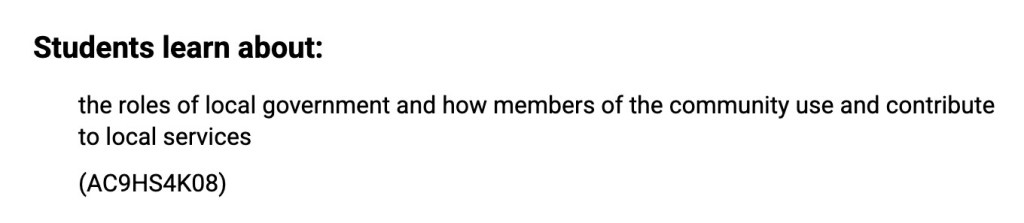
Figure 1: HASS Year 4 Content Descriptor (Australian Curriculum, Assessment and Reporting Authority [ACARA], n.d.).
In term three grade 4 will be focusing on civics and citizenships. Specifically students will be looking at concepts surrounding local government and how they are able to use their voice as young people to make changes in their community.
This unit expands on previous learning that occurred in term one. However, this time around students are expanding their impact. Instead of focusing on the school community students will be participating in conversations surrounding ways to better the local community of which they live in. Furthermore, this unit will allow students to continue to develop general capabilities, such as their ethical understanding and their personal and social capability as they develop concepts surrounding their place in the broader community (ACARA, n.d.).
The importance of students undertaking this learning:
Civics and citizenships education is an important facet present within the HASS curriculum. Good civics and citizenship education sees the teacher facilitating the learning of knowledge that allows for students to act in a way that has real impact on their local community (Reynolds et al, 2019). Allowing for students to become “…active and informed members of the community,” represented in goal two of the Alice Springs (Mparntwe) Education Declaration (Education Council, 2019, p.6; Gordon & Tudball, 2019). Facilitating active citizenship is the main crux of this unit of work.
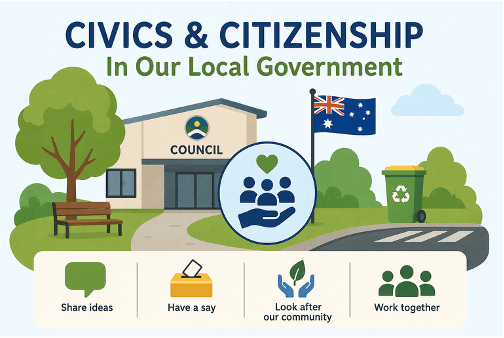
AI Generated
How students will be learning:
The unit will begin with students gaining the broad knowledge of how the local government works and their main responsibilities, students will have the opportunity to hear from local officials to further develop their understanding.
An excursion will also be arranged allowing for students to walk around their local community to pinpoint potential issues they may want to bring awareness to. Furthermore, students will draw upon learning undertaken in previous units, such as issues surrounding sustainability, as potential areas that the local community can be improved.
Learning will conclude with students working in groups in order to identify issues within the local community that matter to them. Student will go on to write to the local government about said issues, using persuasive devices in order to express why resolution on their chosen issues is important, and presenting potential solutions.
How you can support your child’s learning at home:
- Talk to your child about issues within the local community and how they impact you or other members of your family.
- When out in the local community support your child in identify areas of improvement.
Some potential issues/ areas of improve you and your child could identify or discuss include road conditions, accessibility or the quality of facilities (Local Government Association of Tasmania, n.d.).
 epr360at1mjordan
Leave a comment